
BLOG
Construction & Real Estate Insights
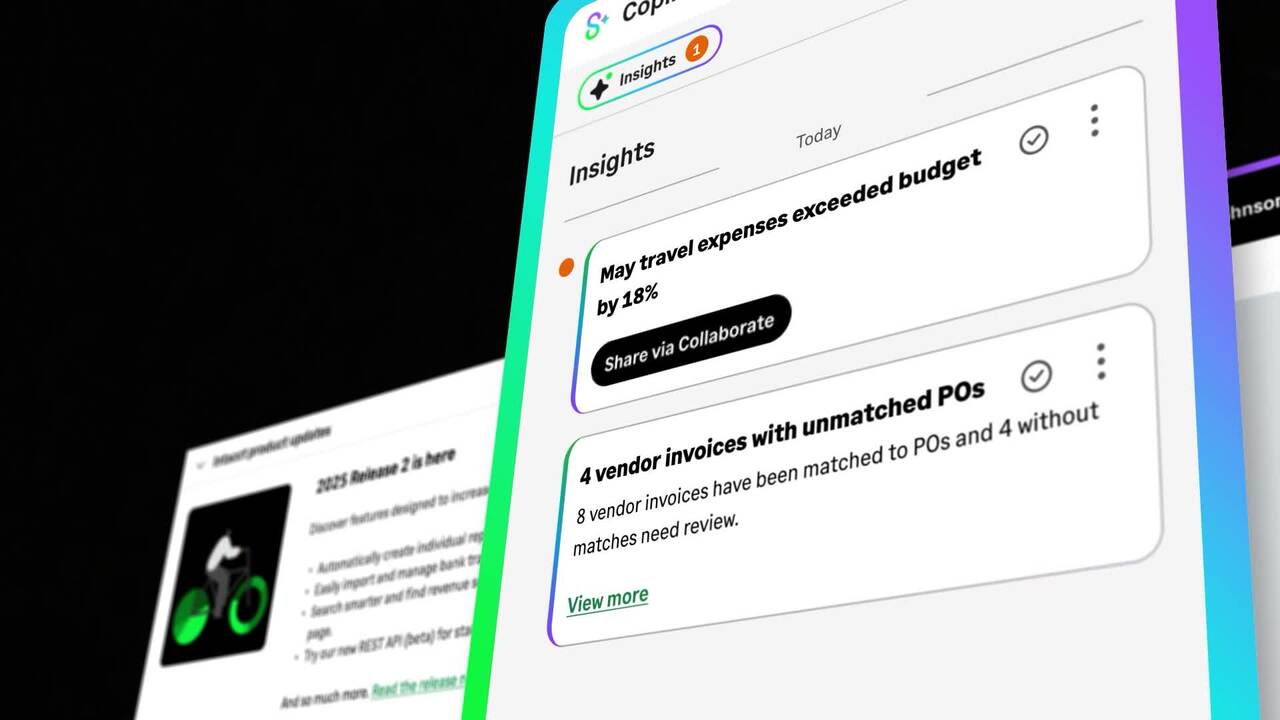
What Sage Copilot Actually Does and Why Construction and Real Estate Teams Should Pay Attention
Blog Posts

How Sage Intacct Helps Electrical Contractors Control Fixed-Price Risk Before Margins Slip

Most fixed-price electrical jobs don't lose money because of one major mistake. They lose margin gradually.
A few extra labor hours each week.Materials that cost more than expected.Extra work that never becomes a change order.
None of it feels dramatic in the moment. But by the time month-end financials arrive, the job may already be off track.
For many electrical contractors, the real challenge is not estimating accuracy. It's how quickly leadership can see when a job is beginning to drift from plan.
Why Fixed-Price Margin Problems Are Hard to See Early
Across the industry, contractors describe fixed-price margin erosion in similar ways:
- "The job looked fine until the close."
- "We didn't realize labor was drifting until it was already over."
- "Material costs moved, but we didn't see the exposure clearly."
These situations occur because financial visibility arrives too late to respond while the job is still in motion.
Many accounting systems used in construction are designed primarily to record history. They show invoices already received, payroll already processed, and expenses already posted to the job. But margin pressure often begins before those costs appear in financial reports.
Early warning signals frequently emerge through operational activity such as purchase orders issued but not yet invoiced, labor hours trending above estimate, or work completed before a change order is formally approved. By the time those costs appear in traditional reporting, the job may already be moving off budget.
How Margin Drift Actually Develops on Electrical Projects
When fixed-price electrical work loses margin, it is rarely caused by a single event. More often, several small operational factors begin compounding across the project.
Labor hours gradually exceed estimates
Labor rarely doubles overnight. Instead, hours slowly drift above estimate. A crew running four or five extra hours per week on a multi-month project may not trigger alarms early. But over time, those small overruns can erase a meaningful portion of the projected margin.
Material exposure begins when the purchase order is issued
Material risk often begins when the purchase order is issued, not when the invoice arrives. Once materials are committed, the contractor has already created financial exposure, even if the invoice hasn't yet appeared in accounting reports.
Extra work happens before it is documented
Electrical crews frequently solve problems quickly to keep projects moving. But when scope changes are not documented immediately, that work may never be recovered through change orders. Over time, unbilled work can significantly affect project profitability.
Portfolio patterns remain hidden
Individual projects may appear manageable in isolation. But patterns often exist across the business:
- Certain job types consistently produce thinner margins
- Some project managers experience higher labor variance
- Specific customers frequently generate scope adjustments
Without portfolio-level visibility, these patterns can remain hidden.
Why Month-End Reporting Leaves Contractors Reacting
Month-end reporting is essential for understanding financial performance. But by the time those reports arrive, much of the job activity has already occurred.
Labor has already been worked.Materials have already been committed.Field decisions have already been made.
That is why many contractors feel they discover margin problems during the close rather than during the project. The challenge is not necessarily forecasting every risk perfectly. It is recognizing earlier signals that a job is beginning to drift.
When contractors gain earlier visibility into job performance, they can respond while the project is still active. They may reallocate labor sooner, escalate scope questions earlier, document change work while it is happening, or adjust purchasing decisions before commitments grow further.
Earlier insight does not eliminate fixed-price risk. But it changes when decisions are made.
How Sage Intacct helps electrical contractors see risk earlier
Financial systems cannot eliminate the uncertainty of fixed-price construction work. Labor markets change, material prices fluctuate, and jobsite conditions evolve.
What better financial visibility can do is shorten the time between when risk begins and when leadership sees it.
Financial platforms designed for project-based businesses, such as Sage Intacct for Electrical Contractors, organize financial information around projects, commitments, and operational activity so contractors can see developing issues earlier.
Job-level financial visibility
Project profitability becomes easier to manage when leadership can review financial data directly at the job level rather than waiting for aggregated reports.
Contractors can evaluate budget versus actual costs, monitor labor performance against estimates, and identify financial movement within active projects.
Committed vs. actual cost visibility
Traditional accounting focuses on posted transactions, costs that have already reached the ledger.
Committed cost visibility adds another layer by showing financial exposure created through purchase orders, subcontract commitments, and other contractual obligations.
This allows contractors to see financial exposure when commitments are made, not weeks later when invoices arrive.
Portfolio dashboards
Project-level visibility helps teams manage individual jobs, but leadership also needs insight across the entire portfolio.
Dashboards help surface patterns such as labor overruns across projects, recurring scope changes, or margin pressure affecting certain job types.
Dimensional analysis
Dimensional reporting allows contractors to evaluate financial performance across multiple operational perspectives.
Firms can analyze results by project manager, job type, customer, service category, or region. This helps leadership identify repeatable drivers of profitability rather than treating margin issues as isolated job problems.
Improve visibility before margin slips
Fixed-price electrical work will always involve uncertainty. What matters is how early you can see cost pressure developing across your projects.
If you're exploring ways to improve job-level financial visibility, learn more about Sage Intacct for Electrical Contractors or explore the related articles in this series.
Start a conversation with one of our experts.
Frequently Asked Questions
Why do fixed-price electrical projects lose margin gradually?
Fixed-price electrical projects often lose margin through small operational changes that accumulate over time. Labor hours may slowly exceed estimates, materials may cost more than expected, or additional work may occur before a change order is documented. Because these shifts happen incrementally, the impact may not be visible until financial reports reveal the margin erosion.
Why do margin problems often appear during month-end close?
Many accounting systems focus on recording posted transactions such as invoices and payroll. By the time those costs appear in financial reports, much of the work has already been completed and key project decisions have already been made. Earlier visibility into job performance helps contractors identify margin pressure before the close.
What are early warning signs that a fixed-price job is drifting off budget?
Common indicators include labor hours trending above estimate, material commitments exceeding planned budgets, scope changes occurring before change orders are documented, or repeated small overruns across multiple weeks. These signals often appear before the financial impact shows up in traditional accounting reports.
What is the difference between committed costs and actual costs?
Actual costs are expenses that have already been recorded in the accounting system. Committed costs represent financial obligations that have been created but may not yet appear in financial reports, such as purchase orders or subcontract commitments. Seeing committed costs helps contractors recognize financial exposure earlier in the project lifecycle.
How can better financial visibility help electrical contractors protect margins?
Better financial visibility helps contractors recognize when a project is beginning to drift from its budget. Earlier insight allows leadership to address labor trends, escalate scope questions, and adjust purchasing decisions while the job is still active. The goal is not to eliminate risk, but to identify and respond to it earlier.
Book a Demo with Alliance Solutions Group
Take a Sage Intacct Product Tour
Strengthen visibility. Improve accuracy. Build a scalable financial foundation.

Why Multi-Entity Accounting Breaks Down for Real Estate Developers
Multi-entity accounting rarely collapses overnight. It stretches quietly as real estate portfolios grow until finance is carrying complexity the system was never designed to handle.
Intercompany balances multiply. Shared services expand. Development entities transition into operating assets. Investor structures layer on top. At first, the accounting system appears to hold. Behind the scenes, however, consolidation logic moves into Excel.
When Does Multi-Entity Accounting Become a Risk Issue?
Multi-entity strain becomes structural when consolidation and visibility move outside the accounting system. In growing real estate portfolios, that often shows up as:
- Manual intercompany reconciliation
- Spreadsheet-driven allocations
- Month-end elimination entries
- Export-and-rework consolidated reporting
At that point, finance isn't scaling with the portfolio. It's compensating for it.
As discussed in The Portfolio Reporting Problem Real Estate CFOs Can't Ignore, reporting latency is rarely a reporting issue alone. It is often rooted in multi-entity architecture that was never designed for portfolio-level visibility.
Why Intercompany Activity Breaks First
Real estate developers operate across property LLCs, development entities, holding companies, and management entities. Capital contributions, management fees, construction cost transfers, centralized payroll, and overhead allocations move continuously between them.
In legacy systems, those flows are often managed through:
- Manual mirror entries across entities
- Spreadsheet allocation logic
- Month-end elimination journals
- Reconciliation clean-up at close
The issue isn't discipline. It's architectural design.
Modern cloud financial management platforms such as Sage Intacct for Real Estate Developers automate inter-entity transactions and apply rule-based eliminations during consolidation, keeping balances aligned across entities inside the system rather than in external workbooks.
When intercompany logic is embedded structurally:
- Due-to/due-from balances stay synchronized
- Eliminations follow predefined rules
- Reconciliation workload compresses
- Consolidated financials reflect live entity data
Where Shared Services Allocation Quietly Escalates Complexity
Shared services are often where multi-entity strain accelerates fastest.
Those costs must be allocated across property entities using defined drivers such as square footage, headcount, revenue, or ownership percentage.
In many organizations, allocation logic lives in Excel. Each month, trial balances are exported, splits recalculated, journals posted across entities, and eliminations adjusted manually.
As the portfolio grows, the risk compounds:
- Allocation drivers drift
- Formula errors cascade
- Audit trails fragment
- Consolidated reporting becomes reconciliation-heavy
Sage Intacct's dimensional architecture allows allocation rules to be defined once and executed automatically inside the system. Drivers can be tied to properties, funds, or regions with full audit transparency.
When Excel Becomes the Multi-Entity Consolidation Bridge
One of the most common inflection points we see is simple:
The ERP handles transactions. Excel handles consolidation. Financials are exported. Eliminations are layered in. Consolidated packages are rebuilt every month.
When Excel becomes the consolidation bridge:
- Version control risk increases
- Audit documentation fragments
- Close cycles stretch
- Headcount grows simply to maintain visibility
- Executive reporting slows
Sage Intacct centralizes consolidation and dimensional reporting inside a unified system view, producing real-time portfolio insight without export-and-rebuild cycles.
Why Entity-Level Accuracy Doesn't Equal Portfolio Visibility
Individual entities may be accurate and compliant. The breakdown occurs when leadership needs cross-entity answers.
Without dimensional structure inside the general ledger, portfolio reporting requires manual stitching across entities. Common portfolio questions, such as NOI by asset class, fund performance by region, or development-phase cost tracking, often demand spreadsheet overlays and reclassification work.
Sage Intacct's dimensional general ledger captures financial and operational data in a structure that supports consolidated insight without sacrificing entity-level detail. That enables:
- Property-level visibility across multiple legal entities
- Fund-level performance reporting
- Investor-ready consolidated statements
- Cross-entity analytics without manual rework
The architecture aligns with how portfolios operate, not just how entities are formed.
How AI Reduces Multi-Entity Fragility
As entity count increases, manual oversight becomes the hidden constraint.
Reviewing dozens of trial balances each month increases oversight fatigue and raises the probability that material variances surface late.
AI capabilities within Sage Intacct, including Sage Copilot, monitor consolidated data across entities and surface anomalies in:
- Intercompany balances
- Allocation patterns
- Unexpected consolidated variances
Instead of manually searching for discrepancies, finance leaders receive prioritized exception alerts.
AI does not replace financial judgment. It reinforces oversight by surfacing structural inconsistencies before they escalate.
When Is It Time to Rethink Your Architecture?
If scale requires increasing manual effort rather than reducing it, the architecture may be the constraint.
Warning signs include:
- Eliminations posted manually each month
- Allocations dependent on spreadsheets
- Consolidated reporting requiring recurring rework
- Close cycles lengthening as entities grow
Multi-entity accounting is not simply about compliance. It is the foundation of portfolio visibility, risk management, and executive decision-making.
What To Do Next
If your portfolio is growing, multi-entity strain will not resolve itself.
Step back and examine where your intercompany logic lives. Consider how shared service allocations are governed and whether eliminations are automated or dependent on month-end intervention. Ask how quickly consolidated financials can be trusted, and whether oversight strengthens or weakens as entity count increases.
The goal is clarity and control: consolidation inside the system, allocations governed by defined logic, intercompany activity automated, and portfolio visibility that strengthens as you grow.
Take a product tour to see how Sage Intacct supports multi-entity automation, dimensional visibility, and AI-assisted exception monitoring.
Frequently Asked Questions
What is multi-entity accounting in real estate?
Multi-entity accounting manages financial operations across multiple legal entities, such as property LLCs, development companies, and management entities, while producing consolidated portfolio reporting.
Why does multi-entity accounting become complex for developers?
Complexity increases due to intercompany loans, shared service allocations, eliminations, development-phase accounting, and the need for portfolio-level roll-ups across separate entities.
How does Sage Intacct handle intercompany eliminations?
Sage Intacct automates inter-entity transactions and applies rule-based eliminations during consolidation, reducing manual journals and reconciliation effort.
How does AI help with multi-entity accounting?
AI monitors consolidated data, detects anomalies in intercompany balances and allocations, and surfaces variances in real time, reducing manual review across large portfolios.
When should a real estate developer move to multi-entity cloud financial management software?
If consolidation depends on spreadsheets, close cycles are lengthening, or allocations require manual rework, it may be time to evaluate a multi-entity-native cloud financial platform.
Book a Demo with Alliance Solutions Group
Take a Sage Intacct Product Tour
Strengthen visibility. Improve accuracy. Build a scalable financial foundation.

The Hidden Risk Behind Long Close Cycles in Real Estate Accounting
Long close cycles in real estate accounting are often treated as operational friction. In reality, they signal structural risk.
In multi-entity portfolios, a prolonged month-end close is not a scheduling issue — it's a structural visibility problem. When consolidated performance takes weeks to finalize, leadership operates without a complete financial picture. That delay affects capital allocation, lender communication, investor reporting, and portfolio-level decisions.
The real cost of a slow close isn't overtime. It's exposure.
Why Do Long Close Cycles in Real Estate Create Risk?
In smaller organizations, a delayed close may simply mean frustration. In a multi-entity real estate portfolio, it creates decision latency.
When financial performance is finalized two or three weeks into the following month:
- Leasing and capex decisions are already underway
- Budget assumptions continue unchecked
- Underperforming assets may not be identified early
- Lender reporting windows compress
By the time the consolidated numbers are validated, operational commitments are already in motion. That gap between activity and insight is where risk accumulates.
This visibility gap often overlaps with broader portfolio reporting challenges. In fact, we explore how reporting architecture breaks down at scale in The Portfolio Reporting Problem Real Estate CFOs Can't Ignore.
What Causes Long Close Cycles in Multi-Entity Portfolios?
Long close cycles in real estate accounting typically stem from structural complexity rather than team capability.
As portfolios grow, so do:
- Intercompany transactions
- Management fee allocations
- Entity-level reporting requirements
- Investor and lender expectations
If consolidation depends on spreadsheets or late-stage eliminations, month-end becomes a reconstruction process instead of a validation checkpoint. Subledgers may not remain synchronized in real time. Intercompany balances may be resolved manually. Allocations may be reviewed only after the month closes.
Instead of analyzing performance, finance teams spend their time reconstructing it.
How Do Manual Reconciliations Delay Financial Insight?
Manual reconciliation does more than extend the close calendar. It postpones variance detection.
Consider a portfolio where one operating entity materially underperforms during the month. If consolidation takes 12 to 15 days, the variance may not surface until after leasing incentives or vendor commitments have already been extended. The delay narrows corrective windows.
When variance detection lags, budget enforcement weakens as well. Commitments stack up before finance can validate spend against approved thresholds. In growing portfolios, this is often how budget discipline quietly erodes as well, a dynamic we examine further in Why Budget Control Breaks First as Real Estate Portfolios Grow.
In conversations with lenders or investors, this compression becomes even more significant. When consolidated performance is delivered late in the reporting cycle, finance teams have less room to validate, explain, and contextualize results.
Over time, this dynamic affects credibility.
Why Does a Long Close Limit Strategic Finance Leadership?
When reconciliations and eliminations dominate the calendar, finance capacity shifts toward processing rather than advising.
Controllers and CFOs should be focused on:
- Portfolio-level NOI trends
- Capital deployment timing
- Risk exposure analysis
- Refinancing strategy
Instead, teams spend large portions of the month resolving discrepancies and validating consolidations.
Modern finance functions are expected to guide strategic decisions. Long close cycles in real estate accounting constrain that advisory capacity.
What Should a Modern Real Estate Close Deliver?
A well-architected close process should provide:
- Continuous multi-entity consolidation
- Real-time synchronization between subledgers and the general ledger
- Early detection of anomalies or imbalances
- Lender-ready reporting within days, not weeks
When those conditions are met, the close becomes a validation milestone rather than a recovery effort.
Earlier visibility reduces exposure by narrowing the gap between operational activity and financial insight.
How Does Sage Intacct Help Shorten Long Close Cycles in Real Estate?
Sage Intacct for Real Estate Developers supports faster, continuous multi-entity consolidation so finance teams can reduce close cycle length and accelerate performance visibility.
Its architecture allows transactions to be recorded once and reflected automatically across related entities. Intercompany eliminations follow predefined rules, reducing manual balancing at month-end.
Instead of exporting data into spreadsheets, entities consolidate within the system itself. Because subledgers and the general ledger update in the same environment, reconciliation work is reduced before the close even begins.
Key structural advantages include:
- Automated intercompany transactions and eliminations
- Real-time subledger-to-general ledger synchronization
- Built-in multi-entity consolidation
- Dimensional reporting across properties, entities, and portfolios
This shifts the close from assembly to validation.
Faster closes are not just efficiency gains — they reduce risk by compressing the time between performance activity and performance visibility.
Where Does AI Improve the Month-End Close?
Artificial intelligence strengthens the close by reducing the delay between transaction activity and issue detection.
Sage Copilot, embedded within Sage Intacct, supports the process by:
- Monitoring close tasks across entities and identifying bottlenecks
- Comparing subledger and general ledger activity to surface discrepancies earlier
- Highlighting unusual cost or revenue variances
- Alerting teams to exceptions instead of requiring full-volume rechecking
This enables exception-based review rather than reactive cleanup.
Instead of discovering issues late in the reporting window, finance teams address discrepancies closer to when they occur. The result is earlier variance insight and stronger advisory capacity.
Talk to an Expert
If your close cycle is becoming a risk factor, evaluate whether your month-end process is delivering visibility fast enough to support executive decision-making.
At Alliance Solutions Group, we help real estate organizations redesign close architecture for multi-entity scale. If your close cycle is becoming a risk factor, talk to an expert about what a modern portfolio finance structure could look like.
Frequently Asked Questions
Why do long close cycles happen in real estate accounting?
Long close cycles in real estate accounting typically occur due to multi-entity complexity, manual intercompany eliminations, spreadsheet-based consolidation, and delayed reconciliation between subledgers and the general ledger. As portfolios grow, these manual processes become harder to scale.
What are the risks of a slow month-end close in a real estate portfolio?
The primary risk is delayed financial visibility. When consolidated performance is finalized weeks after month-end, leadership may make leasing, capital, or budgeting decisions without complete financial insight. This increases exposure and compresses lender and investor reporting timelines.
How can multi-entity accounting software shorten the close cycle?
Multi-entity financial management platforms like Sage Intacct automates intercompany transactions, rule-based eliminations, and consolidated reporting. Real-time synchronization between subledgers and the general ledger reduces manual reconciliation, allowing finance teams to close faster and focus on analysis.
Can AI improve the month-end close process?
AI can improve the month-end close by tracking close progress, identifying discrepancies between subledgers and the general ledger, and surfacing unusual variances earlier in the cycle. This enables exception-based review and reduces manual reconciliation effort.
What is decision latency in real estate finance?
Decision latency occurs when operational decisions move forward before consolidated financial results are fully available. In real estate portfolios, long close cycles increase decision latency, which can lead to delayed corrective action and increased financial risk.
Book a Demo with Alliance Solutions Group
Take a Sage Intacct Product Tour
Strengthen visibility. Improve accuracy. Build a scalable financial foundation.

When Inventory Makes Sense: How Sage Intacct Supports Smarter Material Purchasing for Electrical Contractors
For electrical contractors, material purchasing has become a financial strategy, not just an operational decision. Copper volatility, supplier constraints, and extended project timelines have pushed many firms to consider carrying more inventory to protect margin and ensure availability.
The real leverage lies in how purchase orders, committed costs, and material usage flow through job cost reporting. In an environment of tighter margins and increased surety scrutiny, that distinction is increasingly important.
So the practical question becomes: Should electrical contractors use inventory to control material costs?
Here's when inventory truly makes sense, and how Sage Intacct for Electrical Contractors supports smarter material purchasing without sacrificing early financial visibility.
When Does Material Risk Actually Begin?
Most job cost reporting is reactive by design. Budget versus actual compares what was planned against what has already been spent. That discipline is important. But it does not capture what has already been committed.
Material risk begins when a purchase order is approved, at which point pricing is locked, capital is allocated, and exposure is created.
Inventory does not change the timing of risk. It only changes where materials sit while the risk exists.
Should Electrical Contractors Even Use Inventory?
Inventory can create stability — when the operational foundation supports it.
It often makes sense when:
- Material demand is repeatable across projects
- Projects run long enough to justify pre-buying
- Pricing volatility creates meaningful exposure
- Receiving, issuing, and accountability are clearly defined and enforced
Inventory becomes a liability when:
- Jobs are short-cycle or highly variable
- Materials move informally without job issuance
- Receiving and issuing discipline breaks down
- Administrative overhead outweighs financial benefit
Many contractors are not operationally ready for inventory. That is not a weakness. It is maturity timing.
Inventory is not a badge of sophistication. It is a layer of complexity that must sit on top of disciplined purchasing.
How Sage Intacct Structures Material Purchasing Without Losing Visibility
The difference between systems becomes clear here.
Many accounting platforms emphasize posted transactions over committed costs, which are often tracked separately or outside standard job reporting, leaving actuals to drive reporting while everything else lives outside the general ledger.
Sage Intacct's architecture supports a more structured approach to purchasing and commitment tracking.
It treats purchasing as a structured financial process, not a clerical step. That architectural decision is what allows contractors to gain control whether they use inventory or not.
That structure supports three purchasing approaches, each building on the same committed cost foundation.
1. Purchase Orders as the First Line of Control
In Sage Intacct, a purchase order can create a committed cost that is reflected in job cost reporting.
Project managers can see committed costs before invoices hit accounts payable. Finance leaders can see margin pressure before month-end closes.
Commitments are not reminders. They are financial data.
This structure ensures that material decisions are visible at the moment they are made — not weeks later.
Inventory builds on this foundation. It does not replace it.
2. Direct-to-Job Purchasing (No Inventory Model)
For contractors who do not carry inventory, Sage Intacct still preserves full visibility.
The workflow is disciplined but straightforward:
- A purchase order is issued and coded directly to the job.
- The committed cost appears in job cost reporting immediately.
- When the invoice is entered, the commitment is relieved and recognized as an actual cost.
- Margin reporting reflects both exposure and posted costs.
This approach provides early financial visibility without introducing warehouse management complexity. Contractors can protect margin while keeping operations lean.
Inventory is not required to gain control.
3. Inventory-Managed Purchasing (When You're Ready)
When operational maturity supports it, Sage Intacct's Inventory Management module adds structure to material flow.
Materials are received against purchase orders. Quantities and valuation update on-hand inventory, which can be tracked by location — warehouse, yard, or designated storage.
Materials are then issued from inventory to specific jobs, and issued value flows directly into job cost reporting.
This structure maintains accuracy — but only if operational discipline supports it.
If materials are pulled without being issued to jobs in the system, job costs will understate true consumption. Inventory balances will appear inflated. Margin reporting will gradually lose credibility.
Sage Intacct for Electrical Contractors supports disciplined process. It does not compensate for inconsistent behavior.
Does Inventory Replace Committed Cost Visibility?
No. Exposure is created when the purchase order is approved — not when the invoice is entered. Committed costs remain the first line of control, whether materials sit on a shelf or flow directly to a job.
Inventory is a layer. Committed cost visibility is the foundation.
Cash Flow vs. Price Protection: Making Smarter Decisions
Inventory ties up capital. Just-in-time purchasing increases exposure to price swings.
Neither strategy is inherently right or wrong. The decision depends on capital position, backlog strength, volatility exposure, and operational maturity.
That evaluation only works when committed costs and inventory activity are visible in the same reporting structure.
What leadership needs is clarity.
With Sage Intacct, electrical contractors can evaluate:
- Capital tied up in inventory
- Open commitments not yet invoiced
- Material usage trends by job
- The impact of bulk purchasing on margin performance
In tighter surety environments and more volatile markets, capital discipline becomes as important as operational execution. Inventory decisions should be visible in financial reporting — not hidden in spreadsheets or side systems.
A Practical Readiness Framework for Inventory Adoption
Before adding inventory, leadership should be able to confidently answer yes to the following:
- Do we have defined receiving procedures?
- Do we consistently issue materials to jobs in the system?
- Do we reconcile counts regularly?
- Is accountability assigned?
- Do we understand the working capital impact?
If the answer is no, begin with disciplined purchasing and committed cost visibility first.
Sage Intacct scales with operational maturity. It does not force complexity before your business is ready.
Inventory Is a Layer. Control Is the Strategy.
Electrical margin erosion rarely happens in one dramatic moment. It happens quietly — through material commitments not surfaced early, processes not enforced consistently, and reporting that arrives too late to influence decisions.
Structured purchasing and early visibility address these issues more effectively than inventory alone.
Sage Intacct's structure supports that level of purchasing discipline and visibility.
Work With Experts Who Understand Electrical Contractors
Choosing whether to implement inventory is not simply a software decision. It is an operational and financial strategy decision.
At Alliance Solutions Group, we work exclusively with construction and electrical contractors to design Sage Intacct environments that reflect real-world workflows. We help contractors determine:
- Whether inventory fits their operational maturity
- How to structure purchasing for early visibility
- How to preserve job-level accuracy
- How to protect margin in volatile material markets
If you are evaluating inventory or looking to improve material cost visibility without adding unnecessary complexity, this is often the stage where working with an experienced Sage Intacct partner can help clarify next steps. Schedule a conversation with one of our experts..
Frequently Asked Questions
Should electrical contractors track inventory in their accounting system?Only if operational discipline supports it. Inventory adds value when receiving and issuing processes are consistent. Without that discipline, it can distort job cost reporting.
Does Sage Intacct require inventory to manage material costs?No. Sage Intacct supports PO-driven committed cost visibility and direct-to-job purchasing without requiring inventory adoption.
How do purchase orders improve job cost visibility?In Sage Intacct, purchase orders create committed costs that appear in job cost reporting before invoices are entered, providing earlier visibility into margin exposure.
What happens if materials are not issued to jobs properly?Job cost reports understate material usage. Inventory balances become inaccurate. Over time, financial visibility degrades.
Book a Demo with Alliance Solutions Group
Take a Sage Intacct Product Tour
Strengthen visibility. Improve accuracy. Build a scalable financial foundation.

Why Sage Intacct Treats Committed Costs as the First Line of Control for Electrical Jobs
Electrical projects rarely lose margin overnight.
They lose it quietly.
A purchase order gets issued. Copper pricing moves. A subcontract is approved. Materials are ordered over the phone. Nothing appears wrong in the job cost report because nothing has been posted yet.
By the time the invoice hits accounts payable, the decision that created the risk is already behind you.
That is the difference between accounting and control. And it is why committed cost visibility for electrical contractors matters more than most realize.
Why Budget vs. Actual Reporting Fails on Electrical Jobs
Most electrical contractors rely on budget versus actual reporting to measure job performance. It creates discipline by comparing what was planned against what has already occurred.
But budget versus actual reporting answers only one question: What have we already spent?
It does not answer the more important question: What have we already committed to spend?
That distinction matters because exposure begins at the point of obligation, not at the point of invoice. When a purchase order is issued for $80,000 of material against a $100,000 budget, that commitment represents future cash outflow and potential margin impact, even if no invoice has been received.
Without visibility into job-level commitments, financial reporting becomes reactive, causing leaders to believe jobs are under budget while most of the exposure has already been locked in.
If you want a deeper breakdown of where traditional reporting falls short, read Electrical Contractor Job Cost Reporting: Why Budget vs. Actual Isn't Enough.
Why Informal Purchasing Hides Exposure
Informal purchasing practices are common in the field. Crews need material. Work must continue. A quick call to a supplier keeps the project moving.
While operationally efficient, informal purchasing can create financial blind spots.
Without a structured purchase order process, costs may not be tied to job budgets early, pricing may not be locked, and committed costs may never appear in job-level reporting.
Leadership may review job cost reports that show minimal actual expense while significant obligations have already been created in the background.
True financial visibility requires tracking both what has been posted and what has already been obligated.
What Should Electrical Contractors See Before Month-End?
Electrical contractors should see three numbers clearly and simultaneously: Budget, Committed, and Actual
This is where Sage Intacct changes the structure of control.
When a purchase order is issued and properly configured for a job, Sage Intacct can reflect that amount as a committed cost in job cost reporting. The cost is coded by cost code and cost type, ensuring that it aligns with the original estimate structure. As invoices are received, committed amounts are relieved and recognized as actual costs, preserving the full picture of planned, obligated, and realized spend.
Instead of relying solely on rearview reporting, leaders can evaluate how much of the budget is already obligated and whether exposure is trending toward erosion. That difference changes when leaders can intervene, before cost overruns harden.
How Sage Intacct Elevates Commitments to Decision Data
In many accounting systems, purchase orders function primarily as administrative documents rather than integrated job cost controls. Sage Intacct enables purchase orders to function as financial events. The moment a PO is approved and coded to a job, it becomes visible in job cost reporting as a committed cost.
Purchase Orders Create Structured Commitments
A formal purchase order process accomplishes three critical objectives. It locks in pricing where possible, documents approval before obligation, and records committed cost against the job within job cost reporting. This ensures that exposure is visible at the point of decision, not weeks later at the point of payment.
This same structure also informs smarter inventory decisions. If you are evaluating how structured purchasing connects to inventory strategy, read When Inventory Makes Sense: How Sage Intacct Supports Smarter Material Purchasing for Electrical Contractors.
Job Cost Views Reflect the Full Financial Picture
Sage Intacct job cost reporting can be configured to show budgeted, committed, and actual costs side by side. That layered visibility allows leadership to understand not only what has occurred, but what is pending.
This is especially important on long-duration projects, where purchase commitments may be front-loaded while billing lags behind. Seeing committed versus actual cost helps identify jobs that are financially healthy versus those that are trending toward compression.
Dashboards Surface Exposure Across the Portfolio
At the executive level, the question is rarely limited to a single job. Leaders need to understand exposure across the portfolio.
Through dimension-driven reporting and dashboards, Sage Intacct enables visibility by job, project manager, office, and job type. This allows companies to identify patterns such as specific job categories that consistently carry higher committed exposure or project managers whose commitments outpace billing cycles.
This is where Sage Intacct provides structured visibility that generic accounting platforms often struggle to deliver consistently.
How Copper Volatility Amplifies the Need for Commitment Control
Copper volatility has made pricing conversations more complex, even if contractors often pass through increases. The real exposure lies in the timing between bid, commitment, and billing.
If copper prices move before a purchase order is issued, the original estimate may no longer reflect current cost. If prices move after a purchase order is issued, the margin may be protected, but the financial obligation has already been locked in.
Committed cost visibility clarifies that distinction. It allows finance teams to assess how much material pricing has been secured versus how much remains subject to market movement. That visibility supports both job-level decision making and enterprise-level cash planning.
Can Committed Cost Tracking Improve Future Bids?
Committed cost tracking does more than protect current projects. It improves future estimating discipline.
When commitments are structured and visible, contractors can analyze where actual obligations consistently exceeded original expectations. They can identify cost codes that trend higher than planned, detect patterns in subcontract performance, and isolate areas where informal scope additions were never captured through change orders.
Instead of concluding that a job "went sideways," leadership gains clarity into the precise drivers of variance. That insight feeds directly into the next bid cycle, strengthening pricing accuracy and risk assessment.
Over time, this feedback loop improves margin consistency. It transforms job cost reporting from historical documentation into strategic intelligence.
If you can't see committed costs, you're managing electrical jobs based on history — not reality.
Control Begins Before the Invoice
Electrical contractors operate in environments shaped by copper markets, labor constraints, weather delays, and owner-driven scope changes.
They can control how commitments are formalized and how early exposure becomes visible.
Margin rarely disappears in one dramatic event. It erodes gradually between bid, purchase order, and invoice.
Visibility into committed costs is not simply a reporting enhancement. It is a structural shift from accounting after the fact to control before damage.
Sage Intacct treats commitments as the first line of control — not as paperwork.
Work with Experts Who Understand Electrical Contracting
Electrical contractors need structured purchasing discipline, clear committed cost reporting, and job-level visibility designed for construction reality.
Alliance Solutions Group specializes in helping electrical contractors move from reactive reporting to proactive financial control.
If you want to understand:
- Where your current visibility gaps may exist
- How committed cost reporting would change your job oversight
- Whether Sage Intacct aligns with your growth strategy
Start a conversation with one of our experts.
Frequently Asked Questions
What are committed costs in electrical contracting?
Committed costs are approved financial obligations that have not yet been invoiced. In electrical contracting, this includes issued purchase orders and signed subcontracts tied to a job. Even before invoices arrive, these commitments represent real financial exposure.
Why isn't budget vs. actual reporting enough for electrical jobs?
Budget vs. actual reporting only shows what has already been spent. It does not show what has already been committed. On electrical projects, major costs are often obligated weeks before invoices are posted, which can hide exposure until it is too late to adjust.
How does Sage Intacct track committed costs?
When purchase orders are issued and linked to a job, Sage Intacct can reflect those amounts as committed costs in job cost reporting. As invoices are entered, committed amounts are relieved and recognized as actual costs while preserving full budget, committed, and actual visibility.
How does committed cost visibility improve future bids?
Committed cost tracking helps contractors identify where obligations consistently exceed estimates. By analyzing committed versus actual costs, teams gain clearer insight into material trends, subcontract performance, and scope gaps. This strengthens estimating accuracy and margin discipline on future projects.
Book a Demo with Alliance Solutions Group
Take a Sage Intacct Product Tour
Strengthen visibility. Improve accuracy. Build a scalable financial foundation.

Alliance Solutions Group Appoints Dustin Stephens as Chief Executive Officer
SARASOTA, Florida — January 16, 2026 — Alliance Solutions Group, a Sage-verified software reseller and operating company of Pine Services Group, announced the appointment of Dustin Stephens as Chief Executive Officer.
Stephens brings more than 30 years of experience in construction and construction technology, including 13 years at Sage, where he most recently served as Vice President of Construction and Real Estate. His deep understanding of the Sage ecosystem, construction customers, and partner landscape uniquely positions him to lead Alliance through its next phase of growth.
Founder and former CEO Michael Griffith has transitioned into the role of Chairman, continuing to support Alliance’s leadership and long-term vision. Under Stephens’ leadership, Alliance will remain focused on helping construction and real estate organizations modernize operations, improve financial visibility, and achieve measurable business outcomes through technology.
👉 Read the full press release here.
Book a Demo with Alliance Solutions Group
Take a Sage Intacct Product Tour
Strengthen visibility. Improve accuracy. Build a scalable financial foundation.
Customer Testimonials