
BLOG
Construction & Real Estate Insights
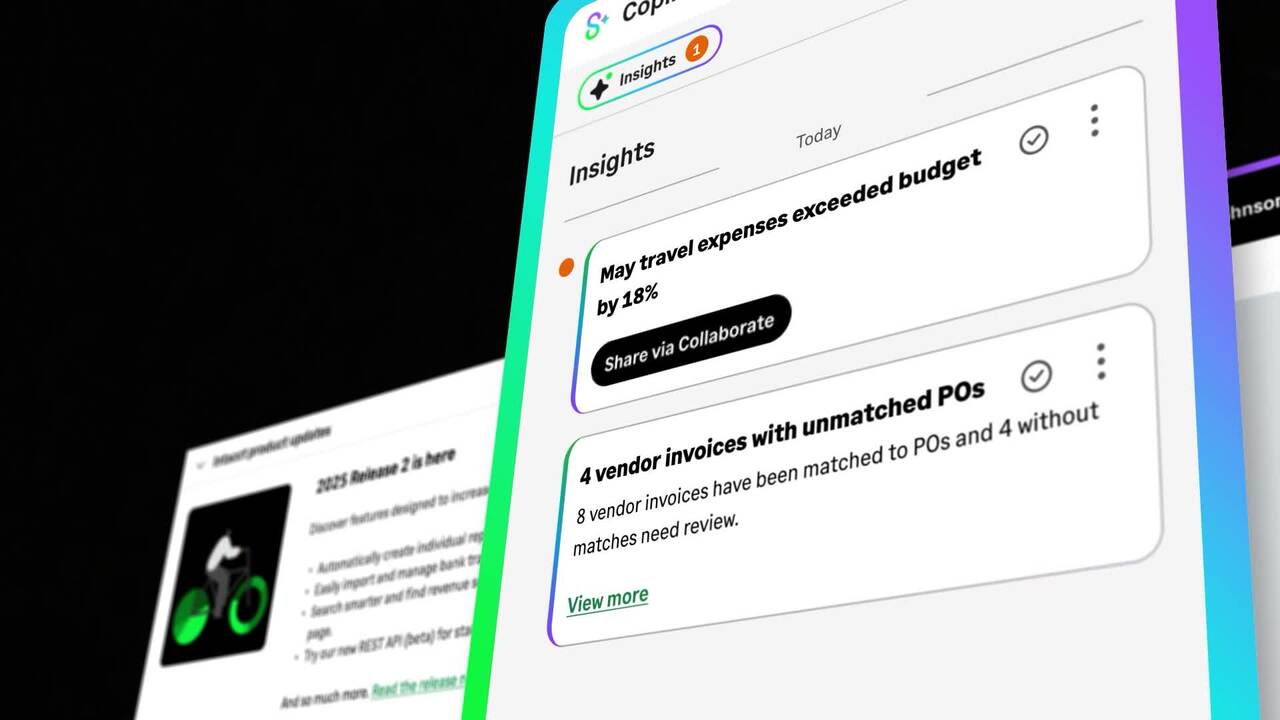
What Sage Copilot Actually Does and Why Construction and Real Estate Teams Should Pay Attention
Blog Posts
.png)
The Portfolio Reporting Problem Real Estate CFOs Can't Ignore

In real estate finance, confidence in the numbers matters as much as the numbers themselves.
When portfolio reporting depends on spreadsheets and manual rollups, that confidence becomes conditional. Not because finance is wrong, but because the reporting process introduces delay, fragmentation, and uncertainty where leadership needs clarity most.
Leadership expects timely answers about overall performance, risk, and exposure. Yet in many organizations, the portfolio view still lives outside the accounting system. It has to be assembled, reconciled, and validated before it can be shared.
This is not a people problem. And it is not a process problem. It is a system limitation.
Why Does Portfolio Reporting Still Depend on Excel?
Real estate portfolios are built to scale. Accounting systems often are not.
As portfolios grow, financial and operational reality spreads across entities, properties, projects, and leases. When a system cannot natively produce a consolidated portfolio view, Excel becomes the default layer.
That creates a predictable set of portfolio reporting symptoms:
- Portfolio performance cannot be seen clearly without exporting data
- Reporting is fragmented across entities, properties, and projects
- Consolidations require manual mappings, eliminations, and review cycles
- Multiple versions of the truth circulate internally because each spreadsheet is a point-in-time snapshot
None of this happens because the finance team is careless. It happens because the system requires manual work to answer portfolio questions that should be routine.
This is the exact limitation we see when portfolios outgrow entry-level accounting systems, something platforms like Sage Intacct were built to address.
What Changes When You Hit Three or More Entities?
There is a tipping point where "we can manage this" quietly becomes "we are always catching up."
Once you are managing three or more entities, close and consolidation time can move from days into weeks, especially when inter-entity activity, allocations, eliminations, and reporting packages are managed outside the system.
The reporting cycle starts to look like this:
- Close entity books
- Export to spreadsheets
- Map and normalize
- Eliminate and allocate
- Reconcile variances
- Rebuild the same logic next month
At that point, the bottleneck is architecture. You are using spreadsheets to do the job your financial system should be doing.
If the Numbers Are Accurate, Why Does Leadership Still Question Them?
Because what leadership is really asking is not "are these numbers correct?" It is "are these numbers reliable enough to make decisions right now?"
That is underwriting logic. Whether the stakeholder is a lender, a board member, or an investment committee, the expectation is the same:
- Results are timely
- Results are consistent period to period
- Results are traceable back to transactions
- The portfolio view is reproducible without heroics
The more important cost of manual consolidation is decision latency. When portfolio reporting is delayed, the business operates with lagging visibility and finance spends cycles explaining changes instead of analyzing drivers.
That is exactly why portfolio reporting problems tend to surface during growth, refinancing, audits, or any period of increased scrutiny. The work is not just heavier. The tolerance for ambiguity is lower.
The Root Cause: Your Portfolio View Lives Outside the Accounting System
Once portfolio reporting for real estate developers becomes spreadsheet-led, you are effectively running two systems:
- The accounting system where transactions are recorded
- The spreadsheet layer where portfolio performance is explained
Spreadsheets are useful, but they are not a scalable system of record. They do not enforce consistent structure, they do not provide real-time visibility, and they make it easy for multiple versions of the truth to exist, even when everyone is acting in good faith.
Moving away from that setup is not trivial. Changing financial systems touches reporting, processes, and people across the organization. That friction is real, which is why many teams tolerate manual work longer than they should.
What Good Portfolio-Level Reporting Looks Like for a Real Estate CFO
Portfolio-level reporting should not be a monthly reconstruction project. It should be a native capability.
In practice, that means three things.
1. Multi-Entity Reporting and Consolidation That Runs Inside the System
A CFO should be able to see consolidated performance without exporting, mapping, and rebuilding logic each close. That includes the ability to handle inter-entity activity, allocations, eliminations, and consolidated reporting as part of the normal reporting workflow.
2. A Dimensional Structure That Matches How the Portfolio Is Managed
Real estate performance is not one-dimensional. The portfolio view needs to reflect the reality of entities, properties, projects, and lease activity without requiring manual rollups to get there.
This is where Sage Intacct for real estate developers fits in a practical way. Its dimensional structure and multi-entity capabilities are designed so portfolio reporting lives inside the accounting system, not in spreadsheets. The goal is not prettier reports. The goal is a portfolio view you can stand behind without a separate consolidation narrative.
3. Drill-Down That Resolves Questions Instead of Creating Them
When a stakeholder asks "what changed," finance should be able to move from portfolio summary to supporting detail without switching tools or rebuilding analysis. That is how you restore trust in the numbers. Not through persuasion, but through visibility.
A Quick CFO Self-Check
If any of these are true, the portfolio reporting problem is already present:
- Portfolio reporting requires heavy Excel work each month
- Consolidations slow the close instead of running cleanly alongside it
- You create multiple ad hoc versions of the same report to answer routine questions
- Leadership questions the numbers because reporting is delayed or unclear, not because finance is wrong
- The portfolio view cannot be reproduced quickly without manual steps
Seeing the Portfolio Clearly Is the Real Test
This portfolio reporting problem exists because many accounting systems were never designed to deliver real-time, consolidated visibility across entities, properties, and projects. When reporting lives outside the system, confidence will always lag behind the numbers.
Sage Intacct for real estate developers was built to support multi-entity portfolios with reporting and consolidation that live inside the accounting system, not in spreadsheets.
To see portfolio-level reporting work as it should, book a demo and review a real real estate portfolio in Sage Intacct.
Frequently Asked Questions
Why is portfolio reporting harder than entity-level reporting in real estate?
Portfolio reporting is harder because it requires consistent visibility across multiple entities, properties, projects, and leases at the same time. Many accounting systems can report accurately at the entity level but were never designed to consolidate and present a real-time portfolio view without manual intervention. As complexity increases, the gap between entity accuracy and portfolio clarity becomes more pronounced.
Is relying on Excel for portfolio reporting always a problem?
Excel itself is not the problem. The issue arises when Excel becomes the primary way portfolio performance is created, reconciled, and explained. When spreadsheets act as a parallel reporting system, confidence depends on manual processes, timing, and individual knowledge rather than a consistent system of record. That is when portfolio reporting starts to slow decisions and invite scrutiny.
At what point does portfolio complexity start to create reporting risk?
For many real estate organizations, reporting risk increases noticeably once the portfolio reaches three or more entities. At that point, inter-entity activity, eliminations, and allocations often push reporting outside the accounting system. The risk is not immediate failure, but growing delay, rework, and reduced confidence as the portfolio scales.
How does Sage Intacct address portfolio reporting problems for real estate developers?
Sage Intacct addresses these challenges by supporting multi-entity reporting and consolidation directly within the accounting system. Its dimensional structure allows real estate finance teams to view performance across entities, properties, projects, and lease activity without relying on spreadsheets to create the portfolio view. The result is faster visibility, clearer drill-down, and greater confidence in portfolio-level reporting as complexity grows.
Book a Demo with Alliance Solutions Group
.png)
Electrical Contractor Job Cost Reporting: Why Budget vs. Actual Isn't Enough
Most electrical contractors rely on budget vs. actual reporting to understand job performance. It's a necessary tool, and for many teams, it's the primary way finance stays connected to the field.
The challenge is not whether budgets are accurate. It's that budget vs. actual only reflects what has already been posted.
Purchase orders are issued. Subcontracts are signed. Labor decisions are made. But until invoices arrive or payroll runs, those obligations often remain invisible in financial reporting. A job can appear on track while margin is already under pressure.
By the time the variance shows up, options are limited. The work is done. The cost is real. Finance is left explaining outcomes rather than influencing them.
This isn't a discipline problem. It's a timing problem built into how many contractors track jobs today.
Why Does Budget vs. Actual Reporting Fail on Active Electrical Jobs?
Budget vs. actual answers one question well: Did we spend more or less than planned? What it does not answer early enough is where exposure is forming while work is still underway. In practice, three gaps show up repeatedly across electrical contractors:
- Committed spend is invisible: Purchase orders and subcontracts represent real financial obligations, but they do not appear in job cost reports until invoices or payroll post.
- Job changes lack financial explanation: Overtime, pricing shifts, scope adjustments, and informal approvals accumulate without a clear cause-and-effect trail until after the period closes.
- Risk compounds across the backlog: One job drifting off plan is manageable. Several jobs drifting simultaneously becomes a margin and liquidity issue, especially under fixed-price contracts.
Why Does Timing Matter More Than Precision in Electrical Job Costing?
Electrical contractors have always operated with uncertainty. What has changed is the speed at which small issues turn into portfolio-level risk. Material pricing volatility, labor availability, overtime, retainage pressure, and backlog commitments do not affect projects in isolation. They stack.
When finance teams lack early insight into commitments and cost trends, margin erosion becomes a timing problem rather than a forecasting one. This challenge is part of the broader job cost visibility gap facing electrical contractors, where financial insight arrives after decisions have already been made.
If finance teams cannot see obligations forming ahead of actual spend, margin erosion does not arrive as a single surprise. It appears gradually, across jobs, until the portfolio tells a different story than the reports did a month earlier.
At that point:
- Corrective levers are limited
- Forecasts must be revised defensively
- External stakeholders often see the results before leadership does
The Job Cost Loop Budget vs. Actual Cannot Complete Alone
Effective job cost control requires a complete loop:
- Budgets define expected cost: The financial intent of the job, by phase and cost type.
- Commitments convert intent into obligation: Purchase orders and subcontracts establish spend before cash moves.
- Committed vs. budget reveals trajectory: Variance shows direction while intervention is still possible.
- Actuals confirm execution: Invoices and payroll validate what occurred.
- Job context explains margin movement: Labor mix, overtime, pricing changes, and scope shifts become traceable drivers, not assumptions.
Without commitments, budget vs. actual remains backward-looking. With them, it becomes a management tool.
How Does Sage Intacct Support Earlier Risk Awareness?
Sage Intacct does not claim to prevent overruns. It enables finance teams to recognize exposure before it hardens into results.
That capability comes from how the system treats commitments and job context:
- Purchasing integrated with job costing: Purchase orders and subcontracts roll directly into committed cost reporting by job, phase, and cost type.
- Committed and actual costs viewed together: Finance teams see what has been spent and what has already been obligated, significantly narrowing the forward-looking gap.
- Dimensional financial structure: Jobs can be analyzed by project manager, office, customer, or work type without rebuilding reports.
- Decision-focused dashboards: Leadership views margin movement and emerging pressure across the job portfolio, not just at month-end.
The result is not additional reporting. It's earlier understanding.
What Changes When Exposure Is Visible Sooner
When commitments and job context surface before actuals post:
- Material pricing shifts appear as exposure, not explanation
- Labor overruns show trend, not surprise
- Fixed-price risk is monitored across the backlog, not discovered after close
For electrical contractors operating on thin margins with overlapping risk, that timing difference often determines whether leadership is managing outcomes or documenting them.
Learn More About Sage Intacct for Electrical Contractors
See how commitments-based job costing helps finance teams recognize risk earlier and manage active jobs with confidence. Book a demo with one of our experts.
Frequently Asked Questions
Why isn't budget vs. actual reporting enough for electrical contractors?
Budget vs. actual reporting only reflects costs after they post to the ledger. For active jobs, key financial obligations, such as purchase orders, subcontracts, and planned labor, often exist weeks before invoices or payroll are recorded. Without visibility into those commitments, margin pressure can build while reports still appear on track.
What are committed costs in construction job costing?
Committed costs represent financial obligations that have been approved but not yet recorded as actual expenses. In electrical contracting, this typically includes purchase orders for materials and executed subcontracts. Committed costs indicate future spend and help finance teams understand exposure before cash is disbursed.
How does Sage Intacct help contractors see job risk earlier?
Sage Intacct surfaces committed costs alongside budgets and actuals within job cost reporting. By tying purchasing and subcontracts directly to jobs and phases, finance teams can see when commitments are consuming margin before invoices or payroll post. This allows leaders to recognize emerging risk while jobs are still active.
Can Sage Intacct show which jobs or project managers are driving margin pressure?
Yes. Sage Intacct uses dimensional reporting to analyze job performance by attributes such as project manager, office, customer, or work type. This structure helps leadership identify where margin pressure is developing across the job portfolio, without relying on spreadsheets or rebuilding reports.
Book a Demo with Alliance Solutions Group
.png)
Financial Visibility for Electrical Contractors: Understanding Job Costing and Margin Risk
Electrical contractors don't lose margin because they misunderstand copper prices, labor rates, or fixed-price risk. They lose margin because they find out too late.
By the time traditional reports surface a problem, the job has already moved past the point where finance can influence the outcome. Decisions become reactive. Conversations turn defensive. And leadership is left explaining results instead of steering them.
That lag between what's happening in the field and what shows up in financial reports is the visibility gap in electrical contracting, and it's quietly holding many electrical contractors back.
Why Do Electrical Jobs Lose Margin Before Month-End?
Most electrical contractors still rely on month-end financials, static job cost reports, and spreadsheets to understand performance. Those tools explain what already happened, but they don't show where exposure is forming while work is still underway. That limitation is exactly why budget vs. actual reporting falls short for electrical contractors when managing active jobs.
But today, exposure forms earlier. Purchase orders are issued weeks before invoices arrive. Subcontracts lock in labor costs long before work is complete. Material pricing shifts after budgets are approved. Yet in many systems, these decisions don't meaningfully surface until costs hit the ledger. A job may look healthy based on actuals while job cost visibility for electrical contractors is already compromised by actual spend.
By the time finance sees the problem, the window to influence the outcome has closed.
That timing gap is where margin disappears.
Why Do Committed Costs Start Creating Risk on Electrical Contracts?
The issue isn't volatility, forecasting accuracy, or effort. It's visibility into what's already been decided. When finance teams can see committed costs and early cost trends while jobs are still active, they gain time to ask better questions, intervene earlier, and change the outcome before margin is gone.
That's the shift modern construction finance is built around.
How Does Sage Intacct Close This Gap?
Sage Intacct is built around a commitments-based visibility model that reflects how electrical contractors actually operate.
Committed costs surface future spend immediately
Within Sage Intacct, purchase orders and subcontracts create committed costs as soon as they're issued. Those dollars aren't theoretical. They represent real obligations that will soon impact cash and margin. Instead of waiting for invoices, finance teams can see future exposure while there's still room to act.
Job cost views show the full picture
Rather than stopping at actuals, Sage Intacct's job cost views include:
- Budget
- Committed
- Actual
Seeing these together changes decision-making. CFOs can identify jobs where commitments are already consuming margin, even if actuals haven't caught up yet. That insight simply doesn't exist in systems built only to look backward.
Dashboards highlight issues before month-end
Month-end reporting is necessary, but it isn't sufficient for managing active jobs.
Sage Intacct's dashboards surface:
- Cost drift across active projects
- Margin pressure developing over time
- Exceptions that need attention now
Dimensions reveal where problems actually live
Dimensions extend visibility beyond a rolled-up P&L. They allow performance to be analyzed by:
- Job
- Project manager
- Office or region
- Customer or job type
Instead of debating why margins moved, leadership can pinpoint where and why margin erosion is occurring across electrical projects, and whether patterns are emerging.
What Changes for the CFO
When the visibility gap closes, the CFO role shifts. Finance becomes an early warning system rather than a historical reporter. Conversations with operations become proactive. Cash planning improves. Month-end surprises decrease.
Most importantly, leadership no longer relies on spreadsheets and manual workarounds to understand active jobs.
Visibility First. Control Follows.
You can't strengthen purchasing discipline, job cost accountability, or fixed-price risk management if you can't see commitments and trends early.
Visibility isn't the end goal, but it is the prerequisite for everything that follows.
If your team is still managing active jobs primarily through month-end reports and spreadsheets, the issue isn't effort. It's timing.
Learn more about Sage Intacct for electrical contractors and see commitments-based visibility in action.
Frequently Asked Questions
What is the "visibility gap" in electrical contracting?
The visibility gap is the lag between when operational decisions are made on a job and when their financial impact shows up in reports. For many electrical contractors, costs are only visible once invoices post, which is often too late to influence margin. Closing this gap requires seeing committed costs and early trends while jobs are still active.
What are committed costs, and why do they matter for job profitability?
Committed costs represent spend that has already been authorized, such as purchase orders and subcontracts, even if invoices haven't been received yet. These costs matter because they reflect future financial obligations. Without visibility into committed costs, a job can appear profitable based on actuals while margin has already been consumed.
Why aren't month-end job cost reports enough to manage active jobs?
Month-end job cost reports are designed to explain past performance, not manage work in progress. They show what has already happened but don't surface exposure forming mid-job. By the time issues appear in month-end reports, the opportunity to intervene has often passed.
How does Sage Intacct improve financial visibility for electrical contractors?
Sage Intacct improves visibility by combining budget, committed, and actual costs in job cost views, surfacing future spend as soon as it's authorized. Dashboards highlight cost drift and margin pressure before month-end, while dimensions allow CFOs to analyze performance by job, project manager, office, or job type.
Book a Demo with Alliance Solutions Group

What Real Estate CFOs Need From Their Accounting System, and Why Legacy Tools Fall Short
Is your accounting system equipped to handle the complexity your portfolio demands today?
As portfolios grow, issues start to surface: fragmented reporting, slower close cycles, and increasing strain from multi-entity complexity. While each of these challenges shows up differently, they often point to the same underlying problem: the financial system was built for a simpler organization and hasn't kept pace with your growth.
This raises a bigger question: what should a real estate CFO expect from a modern financial system? And why do so many legacy tools fall short, even when managed by strong finance teams?
Why Legacy Systems Fail Quietly in Real Estate
Legacy accounting tools rarely fail with a crash. They fail by requiring more and more manual work to produce the same results.
The system appears to function: month-end closes, reports are generated, and numbers reconcile. But behind the scenes, finance teams are compensating for what the system cannot do natively. Behind the scenes, finance teams are compensating for system gaps:
- Consolidation happens in spreadsheets
- Intercompany eliminations are manual
- Allocations are rebuilt from exported data
- Reporting packages are assembled outside the system
These systems were designed for simpler, single-entity environments. They handle transactions well but were never built to support automated consolidation, intercompany processing, or portfolio-level visibility at scale.
The tipping point is subtle: growth begins to require additional headcount just to maintain visibility. When scaling the portfolio means scaling the manual effort proportionally, the architecture is the constraint.
What Should a Real Estate CFO Require From a Financial System?
These are not aspirational features. They are the structural prerequisites for portfolio-level finance that is timely, reliable, and scalable.
Multi-entity architecture that scales without manual overhead. Consolidation, intercompany transactions, and eliminations should run inside the system, not in spreadsheets.
Real-time, consolidated portfolio visibility. Leadership should be able to view performance instantly without waiting for manual consolidation or reporting.
Proactive budget and spend governance. Budget controls should operate at the point of spend, with committed and actual costs reflected together in real time.
A close process that enables analysis, not one that consumes it. Finance teams should spend the close validating performance, not rebuilding it.
Dimensional structure that matches how the portfolio is managed. Reporting should work across property, entity, fund, and region without manual rework.
A scalable foundation that reduces effort as complexity grows. New entities should inherit existing controls, reporting, and allocation logic automatically.
These capabilities are interdependent. Gaps in one area create gaps across the entire reporting and forecasting process.
Where Manual Workarounds Mask Deeper Infrastructure Problems
The most common reason legacy systems persist longer than they should is that workarounds make the gap invisible to leadership.
Finance teams adapt by building spreadsheet bridges, documenting manual adjustments, and relying on consistent monthly routines.
But the costs are real, even when they do not appear as a line item:
- Headcount grows to maintain visibility instead of adding strategic capacity
- Close cycles lengthen as consolidation scales with entity count
- Reporting depends on individual knowledge, creating key-person risk
- Forecasting slows due to manual data pipelines
- Audit prep becomes fragmented and time-intensive
- Onboarding takes longer because processes live outside the system
The issue is not whether the system can produce accurate numbers. It is whether it can produce them fast enough, consistently enough, and with enough structure to support decision-making at scale.
How Sage Intacct Aligns With Modern Real Estate Finance Requirements
Sage Intacct for Real Estate Developers is designed around these requirements. Rather than retrofitting single-entity tools for multi-entity complexity, its architecture starts from the assumption that portfolios will grow and that the demands on finance will grow with them.
Mapped against the requirements framework above:
- Multi-entity consolidation with automated intercompany transactions and rule-based eliminations runs inside the system. Entities consolidate without export-and-rebuild cycles.
- A dimensional general ledger captures financial and operational data in the structure real estate portfolios actually operate in, supporting reporting, forecasting, and analysis by property, entity, fund, region, or development phase.
- Budget controls embedded in spend workflows validate purchasing and approvals against budgets in real time, with committed and actual costs reflected together in available budget calculations.
- Continuous subledger-to-GL synchronization compresses the close by reducing reconciliation work before it begins. Finance teams spend the close validating, not reconstructing.
- Scalable governance means new entities inherit existing allocation rules, reporting structures, and budget controls automatically. Growth adds complexity to the portfolio without proportionally adding manual effort to finance.
Organizations that have made this transition report significant operational compression. One real estate investment firm reduced book consolidation from 80 to 100 hours down to minutes after moving to Sage Intacct. Others have reported close cycles shortened by 65% and audit preparation time reduced by two-thirds. These are structural improvements in how finance capacity is used.
The goal is not a better version of the current process. It is a different operating model for finance: one where the system carries the complexity so the team can focus on the decisions that complexity creates.
How AI Reinforces Financial Oversight at Scale
As portfolio scale increases, manual oversight becomes the hidden constraint. Reviewing dozens of trial balances, scanning for anomalies across entities, and tracking close progress manually all require attention that scales linearly with complexity.
Sage Copilot, embedded within Sage Intacct, reinforces oversight by monitoring consolidated data continuously and surfacing issues before they compound:
- Continuous monitoring across entities flags unusual cost or revenue patterns without requiring full-volume manual review
- Plain-language variance explanations help finance leaders prioritize quickly and communicate findings to stakeholders
- Close task tracking identifies bottlenecks across subledgers and the general ledger, keeping the close on schedule
- Exception-based alerting shifts the review model from reactive cleanup to proactive intervention
AI does not replace financial judgment. It extends the reach of oversight so that growing portfolios do not require proportionally growing review effort. For CFOs evaluating whether their current system can support the next stage of growth, AI-assisted monitoring is increasingly part of what the modern bar looks like.
Evaluate Your Financial Infrastructure
If this raises questions about whether your system can support your portfolio, that is the right starting point.
At Alliance Solutions Group, we help real estate organizations evaluate their financial infrastructure against the requirements of multi-entity scale.
Take a product tour to see how Sage Intacct supports scalable real estate finance.
Frequently Asked Questions
What should a real estate CFO look for in a financial management system?
A real estate CFO should look for native multi-entity consolidation, automated intercompany processing, a dimensional general ledger that supports reporting by property, entity, fund, and region, proactive budget controls with committed cost visibility, and a close process that compresses rather than stretches as the portfolio grows. The system should produce consolidated portfolio visibility without relying on spreadsheets or manual assembly.
Why do legacy accounting systems struggle with multi-entity real estate portfolios?
Most legacy accounting systems were designed for single-entity or lightly multi-entity businesses. They handle transactions and entity-level reporting well but were not architected for automated consolidation, rule-based intercompany eliminations, dimensional reporting, or real-time portfolio visibility. As entity count grows, the gap between what the system can do natively and what the portfolio requires is filled by manual workarounds that consume finance capacity and introduce risk.
How do manual workarounds in accounting systems create hidden risk?
Manual workarounds create risk by introducing version ambiguity, key-person dependency, and process fragility into the financial reporting chain. When consolidation, allocation, and reporting logic lives in spreadsheets rather than in the system, confidence in the numbers depends on individual execution rather than structural controls. Close cycles lengthen, audit documentation fragments, and finance teams spend capacity on data logistics rather than strategic analysis.
How does Sage Intacct support real estate portfolio finance at scale?
Sage Intacct supports real estate portfolio finance by providing multi-entity consolidation, automated intercompany transactions, dimensional reporting, budget controls embedded in spend workflows, and continuous subledger-to-GL synchronization. Its architecture is designed so that new entities inherit existing governance and reporting logic automatically, allowing finance operations to scale with the portfolio rather than requiring proportional increases in manual effort.
When should a real estate developer consider replacing their accounting system?
Consider evaluating your accounting system when growth requires increasing manual effort rather than reducing it. Common signals include: consolidation depends on spreadsheets, close cycles lengthen with each new entity, allocations require monthly rework, portfolio reporting cannot be produced without manual assembly, and finance headcount grows to maintain visibility rather than to expand strategic capacity. These are indicators that the system is no longer scaled to the portfolio.
Book a Demo with Alliance Solutions Group
Take a Sage Intacct Product Tour
Strengthen visibility. Improve accuracy. Build a scalable financial foundation.

The Visibility Gap that Undermines Real Estate Accounting
Forecasting failures in multi-entity real estate portfolios are rarely a modeling problem. They are a data timing problem.
When forecast inputs are weeks old, fragmented across entities, and manually assembled, even strong models produce unreliable outlooks.
As portfolios grow, entity-level data arrives on different timelines, and assumptions are locked before a full portfolio view exists. By the time a forecast is assembled, it is already behind current conditions.
Why Does Forecasting Break Down in Growing Real Estate Portfolios?
In smaller portfolios, forecasting works because the data is centralized, current, and easy to manage.
As portfolios grow, that breaks down. Forecasting becomes fragmented across entities:
- Forecasts are built at the entity level, then manually consolidated
- Financial data arrives on different timelines across the portfolio
- Key assumptions, like occupancy, revenue, and capital timing, are locked before a full view is available
- Manual rollups introduce errors and version confusion
The result is a portfolio forecast constructed from pieces that were never current at the same time.
This is structurally similar to the reporting problem we explore in The Portfolio Reporting Problem Real Estate CFOs Can't Ignore. The same architectural constraint that delays reporting also degrades forecasting: when the portfolio view lives outside the accounting system, every downstream use of that data inherits the delay.
What Makes Scenario Modeling Fragile at Portfolio Scale?
Leadership expects agility from finance. Questions like "What if we delay this development phase?" or "What happens if occupancy drops 200 basis points across the Southeast portfolio?" require fast iteration. They often arrive with short decision windows.
Spreadsheet-based forecasting cannot deliver that speed reliably.
When scenario modeling depends on interconnected spreadsheets across entities, small assumption changes cascade unpredictably. The process introduces several compounding problems:
- Rebuilding scenario logic across workbooks takes days, not hours
- Version control becomes a liability when multiple forecasts circulate simultaneously
- Formula dependencies are difficult to trace and easy to break
- The time required to produce a scenario response often exceeds the decision window
Finance cannot respond fast enough to influence decisions, and delayed answers carry limited confidence.
This dynamic reinforces the pattern described in Why Multi-Entity Accounting Breaks Down for Real Estate Developers: Excel becomes not only the consolidation bridge but also the forecasting engine. And it strains under both loads.
How Does the Visibility Gap Affect Capital and Portfolio Decisions?
When forecasting lags, the consequences show up in real decisions.
Consider a development-phase project that overspends against forecast. If the variance is not visible until the next manual rollup, the next capital call may be sized using assumptions that are already outdated. The same applies to refinancing decisions modeled with stale occupancy or NOI projections, or to investor reporting packages that reflect last month's committed costs rather than this month's reality.
Portfolio-level NOI forecasts are especially vulnerable. When committed costs are not reflected alongside actuals, the outlook carries an optimistic bias that leadership may act on without realizing the exposure.
Over time, forecasts lose credibility, and leadership begins to question the numbers behind key decisions.
What Does a Reliable Forecasting Foundation Require?
- Consolidated, real-time financial data across all entities. Finance should not need to wait for every entity to close before assembling a portfolio view.
- Dimensional structure that matches how the portfolio is managed. Slicing by property, entity, fund, region, or development phase should not require manual rollups.
- Committed and actual costs reflected together. Forecasts should account for known obligations, not just posted transactions.
- A single version of financial truth that is current at the time of analysis. Multiple spreadsheet versions circulating internally is not a forecasting foundation. It is a liability.
How Sage Intacct Strengthens the Forecasting Foundation for Real Estate
Sage Intacct for Real Estate Developers provides the real-time, consolidated data architecture that forecasting depends on. Rather than replacing forecasting tools or methodologies, it ensures the data feeding those tools is current, complete, and structured for portfolio-level analysis.
Key structural capabilities include:
- Real-time multi-entity consolidation, so forecast inputs reflect current performance across the portfolio rather than last period's exported snapshots
- A dimensional general ledger that allows finance teams to model scenarios by property, entity, fund, or region without rebuilding rollup logic in spreadsheets
- Committed cost visibility alongside actuals, ensuring forecasts account for signed contracts and approved purchase orders before invoices arrive
- Automated intercompany eliminations and allocations that produce clean consolidated data continuously, not just at month-end, keeping the forecast pipeline free of manual reconciliation noise
Because financial data is continuously consolidated and synchronized, processes that once took days or weeks compress significantly, accelerating both close and forecasting cycles.
Sage Intacct does not forecast for you. It closes the visibility gap so that whatever forecasting approach your organization uses is built on a trustworthy, current data foundation.
Where AI Adds Early Signal to the Forecasting Cycle
Sage Copilot, embedded within Sage Intacct, extends the visibility advantage by surfacing anomalies and variance signals earlier in the cycle.
Instead of discovering a cost spike or revenue shortfall during the next manual forecast refresh, finance teams receive alerts closer to when the issue occurs. Sage Copilot supports this by:
- Continuously monitoring financial data across entities and flagging unusual cost or revenue patterns
- Highlighting budget-versus-actual variances with plain-language explanations so teams can assess impact quickly
- Surfacing exceptions that would otherwise require full-volume manual review, freeing capacity for scenario analysis and strategic work
AI does not replace the forecasting process. It compresses the lag between financial activity and awareness, which is exactly the gap that undermines forecasting confidence.
See Portfolio-Level Visibility in Action
If your forecasts take weeks to assemble and still lack confidence, the constraint may be your data foundation.
Take a product tour to see how Sage Intacct delivers real-time consolidation, dimensional reporting, and portfolio-level visibility for real estate developers.
Frequently Asked Questions
Why do real estate portfolio forecasts become unreliable as entities grow?
As entity count increases, forecasting inputs fragment. Each entity closes on a different timeline, assumptions are locked at different points, and manual rollups introduce delay and version risk. The result is a portfolio outlook assembled from data that was never current at the same time. The issue is not weaker analysis. It is a data pipeline that cannot keep pace with portfolio complexity.
What is the visibility gap in real estate forecasting?
The visibility gap is the delay between when financial activity occurs and when that activity is reflected in the data finance uses to forecast. In multi-entity portfolios, this gap widens as consolidation, intercompany eliminations, and manual reconciliation push finalized data further from the events it describes. Forecasts built on data with a wide visibility gap carry inherent staleness.
How does stale data affect capital allocation decisions?
When forecasts rely on stale inputs, capital allocation decisions may be made using assumptions that no longer reflect current conditions. Development-phase capital calls, refinancing models, and investor reporting packages are all vulnerable. Committed costs that have not yet been posted create an optimistic bias in the forecast, which can lead to undersized reserves or mispriced obligations.
How does Sage Intacct improve forecasting for real estate developers?
Sage Intacct improves forecasting by providing the real-time, consolidated data foundation that forecasts depend on. Its multi-entity architecture, dimensional general ledger, and automated intercompany processing ensure that the data feeding forecasting tools is current, complete, and structured for portfolio-level analysis. This closes the visibility gap and allows finance teams to iterate on scenarios using live data rather than static spreadsheet exports.
Can AI improve financial forecasting in real estate portfolios?
AI capabilities within Sage Intacct, including Sage Copilot, support forecasting by surfacing variance signals and anomalies earlier in the cycle. Continuous monitoring flags unusual patterns across entities, and plain-language va
Book a Demo with Alliance Solutions Group
Take a Sage Intacct Product Tour
Strengthen visibility. Improve accuracy. Build a scalable financial foundation.

How Inventory Management in Sage Intacct Helps Electrical Contractors Make Smarter Purchasing Decisions
Electrical contractors make material purchasing decisions every day. The challenge is not deciding what to buy. It is deciding when to buy it.
Without clear visibility into what has already been committed to a job, those decisions often rely on incomplete information. Materials may be purchased earlier than necessary, tying up cash. Or they may be purchased later than planned, exposing the project to price changes or delays.
Inventory can help manage that risk, but only when it is connected to disciplined purchasing and accurate job costing.
Sage Intacct links purchase orders, inventory, and job cost reporting so electrical contractors can see purchasing commitments earlier and make more informed decisions about buying timing.
Why Material Purchasing Timing Creates Risk on Electrical Jobs
Material costs rarely derail a project overnight. The risk usually develops gradually as purchasing decisions are made throughout the life of a job.
The gap between estimating, purchasing, and invoicing is where pricing changes and purchasing timing problems hide. If pricing shifts between estimating and purchasing, margins change. These changes often become visible only when invoices arrive.
Several common habits contribute to this problem:
- Purchasing happens informally through calls or emails
- Purchase commitments are not consistently recorded
- Job cost reports show actual costs but not future obligations
Many contractors rely on budget-versus-actual reporting, but this approach often reveals cost problems only after purchasing decisions have already been made. Our article Electrical Contractor Job Cost Reporting: Why Budget vs Actual Isn't Enough explores these reporting limitations in more detail.
Buying Too Early vs. Buying Too Late: The Purchasing Timing Problem
Every material purchase involves a tradeoff between cash and cost protection.
Buying too early ties up working capital. Materials sit in a warehouse, on a truck, or at a staging area while the project timeline unfolds. Capital that could support other job costs or bonding capacity is locked into materials that may not be needed for weeks or months.
Buying too late increases exposure to price volatility and supply disruption. Copper pricing alone can shift meaningfully within a project lifecycle. When materials are not secured early enough, the margin established at estimating may no longer hold by the time purchasing happens.
Neither approach is inherently wrong. The right answer depends on the project, the material, and the contractor's financial position. What matters is having the information to evaluate the decision before committing.
How Sage Intacct Gives Contractors Better Purchasing Information
Sage Intacct connects purchasing activity, inventory tracking, and job costing within the same system. This structure gives contractors better information at the point where purchasing decisions are made, not weeks later when invoices arrive.
Purchase Orders Capture Commitments Before Invoices Arrive
When a purchase order is issued in Sage Intacct, the expected cost is documented and the commitment becomes visible in job cost reporting. Project managers can see what has been committed. Finance leaders can see margin exposure across active projects.
This is where purchasing timing decisions improve. When leadership can see open commitments alongside job budgets, they can evaluate whether additional purchasing makes sense or whether existing commitments already cover near-term needs.
For a deeper look at how committed costs function as the first line of financial control, see Why Sage Intacct Treats Committed Costs as the First Line of Control for Electrical Jobs.
Receiving Materials Maintains Inventory Accuracy
When materials arrive, they are received against the purchase order. This records what has been delivered, the quantity received, and what orders remain outstanding.
Accurate receiving is where inventory reliability starts. When receiving is inconsistent, inventory balances drift. That drift creates exactly the kind of false confidence that leads to duplicate purchasing or materials that cannot be located when needed.
Issuing Materials Connects Usage to Job Costs
When materials are used, they can be issued from inventory and assigned to the specific job where the work occurs. This moves the material cost into the project where it belongs and ensures job cost reports reflect actual consumption.
Without consistent issuing, job costs understate material usage. Inventory balances appear higher than they are. Over time, both reporting streams lose credibility.
What Changes When Purchasing Visibility Improves
When purchasing, inventory, and job costing operate within the same system, contractors can evaluate material decisions with better information.
Leadership can answer questions such as: Should pricing be locked in now with a purchase order, or is the current backlog too uncertain to justify early purchasing? Does the project timeline support pre-buying, or would a shorter purchasing window better protect cash? Are materials already available in inventory that could be issued to this job?
These are the questions that determine whether a contractor buys at the right time. Sage Intacct surfaces the data to evaluate them.
For contractors who choose not to maintain inventory, purchase orders still create committed cost visibility. The purchasing timing benefit exists whether inventory is part of the workflow or not. Our article When Inventory Makes Sense: How Sage Intacct Supports Smarter Material Purchasing for Electrical Contractors covers how to evaluate whether inventory fits your operational maturity.
When Inventory Supports Better Purchasing Decisions (and When It Creates New Problems)
Inventory can reduce purchasing uncertainty when material demand is predictable. Contractors who frequently purchase the same materials across multiple projects, or who benefit from bulk pricing, can use inventory to stabilize costs and reduce supply risk.
Inventory creates operational problems when materials are not tracked carefully. Common issues include cash tied up in materials purchased too far ahead of need, materials stored across warehouses, trucks, and job sites without clear accountability, and duplicate purchases when teams cannot confirm available stock.
A common situation: inventory records show materials available, but crews cannot locate them. The contractor purchases the same materials again. The system still shows the original stock on hand. Job costs and inventory balances both become unreliable.
Inventory improves purchasing decisions only when receiving, tracking, and issuing processes are consistent. Without that discipline, inventory adds complexity without improving visibility.
Take a Product Tour to See How It Works
Inventory management is most valuable when it supports better purchasing decisions, not when it adds administrative overhead.
Take a product tour to see how Sage Intacct helps electrical contractors manage purchasing commitments, inventory visibility, and job cost reporting across their projects.
Frequently Asked Questions
How does inventory help electrical contractors make better purchasing decisions?
Inventory gives contractors the ability to purchase materials when pricing or availability is favorable and issue those materials to jobs when they are needed. This separates the purchasing decision from the project installation timeline. The benefit depends on consistent receiving and issuing processes. Without those, inventory records lose accuracy and purchasing decisions still rely on incomplete information.
What is the difference between buying materials for inventory and buying directly for a job?
When materials are purchased for inventory, they are received into stock and later issued to specific jobs as needed. When materials are purchased directly for a job, the cost flows to that project immediately. Both approaches create committed costs when a purchase order is issued. The difference is whether materials pass through an inventory holding step before reaching the job.
How does Sage Intacct help contractors decide when to buy materials?
Sage Intacct connects purchase orders, inventory balances, and job cost budgets in the same reporting structure. Contractors can see what has already been committed, what inventory is on hand, and how additional purchasing would affect project margins. This visibility supports more informed decisions about purchasing timing.
What happens when inventory records become inaccurate?
When materials are removed from inventory without being issued to a job, inventory balances overstate what is available. This can lead to duplicate purchases, difficulty locating materials, and job cost reports that understate actual material consumption. Maintaining accurate receiving and issuing discipline is essential for inventory to support reliable purchasing decisions.
**Can contractors improve purchasing visibility wit
Book a Demo with Alliance Solutions Group
Take a Sage Intacct Product Tour
Strengthen visibility. Improve accuracy. Build a scalable financial foundation.
Customer Testimonials