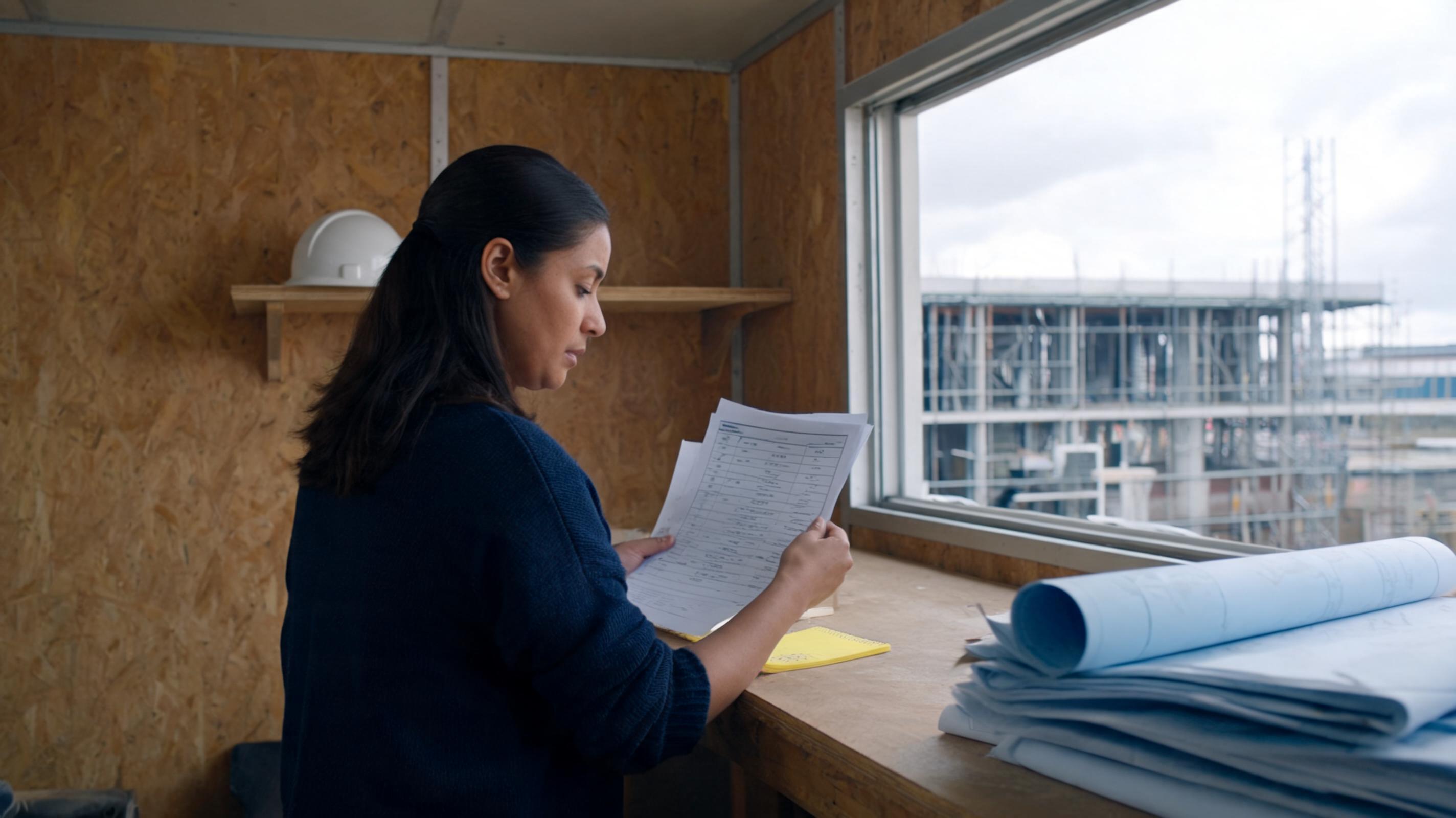


A general contractor wins a bid on a Friday. Monday morning, the estimator hands the accounting team a spreadsheet with forty line items: labor, materials, equipment, subcontracts, general conditions. Someone retypes each line into the accounting system by hand, mapping it to a cost code that mostly matches what the estimator meant. There is no line for contingency. It did not fit cleanly into a cost code, so it got left off.
Ninety days in, a supplier substitution on an electrical component adds cost nobody planned for. The change gets handled in the field with a phone call, not a documented change order. Sixty days after that, the project accountant runs a budget-to-actual report and finds three cost codes already over, with no contingency line to absorb any of it.
Nobody made a bad call at any single point. The budget was wrong from the day it was built. Nobody looked closely enough to catch it until the money was already spent.
That is the real budget problem in construction. It is not only that costs get missed once work is underway. It is that the budget itself is built on a manual handoff, thin on contingency, and disconnected from the accounting system before a single invoice arrives.
The Budget Fails at the Handoff, Not in the Field
Cost control conversations usually focus on tracking costs once a project is underway: change orders, pay applications, monthly close. But the point of failure is often earlier, at the moment an estimate becomes a working budget. Keeping a construction project within budget is difficult by nature, and cost overruns are common even among well-run firms. A few pressure points show up again and again.
Contractors have to bid competitively to win the work, which keeps margins slim and leaves little room for error if costs move. Layer on complex payment cycles, high upfront costs for materials and labor, and multiple cost types that all need tracking at a granular level, and a budget built by hand is exposed before the crew ever shows up on site.
Four Places the Budget Breaks Before the First Invoice
Four specific gaps show up most often between a winning bid and a working budget.
- Slim margins with no cushion. Competitive bidding keeps margins thin, and many estimates skip a contingency line entirely, or size it too small to matter.
- Manual line-item transcription. Moving an estimate into accounting cost codes by hand introduces transcription errors and mismatched categories at the exact moment the budget is supposed to be most accurate.
- Price volatility nobody priced in. Tariffs have pushed up the cost of steel, aluminum, copper wiring, prefabricated modules, and electrical components. A budget locked before those moves has no built-in flag for the exposure.
- Poor visibility between field and office. Rework that never gets communicated to the finance team, and change orders that get handled verbally instead of documented, both lead directly to revenue leakage: the amount collected falling short of what the job actually cost.
Industry research puts a number on how much time this manual reality actually costs. Roughly 35% of a construction professional's time, about 14 hours a week, goes to unproductive activity such as tracking down project information, resolving conflicts, and managing rework. Much of that time traces straight back to a budget and a field team that are not working from the same numbers.
The Cost of Getting the Handoff Wrong
The financial impact of a manual handoff is bigger than it looks, because it is spread across dozens of small errors rather than one big miss. Research from Accenture estimates that up to 80 percent of transactional finance work, the kind involved in moving an estimate into cost codes and reconciling it against invoices, is a strong candidate for automation. Yet more than half of accounts payable teams still spend over 10 hours a week processing invoices manually, and roughly six in ten re-key invoice data into the accounting system by hand. Every one of those manual touches, spread across dozens of line items on every job, is another point where a budget can drift from what the estimator actually intended before a single invoice arrives. That is not a staffing problem. It is the same handoff, repeated on every job.
Manual Handoff vs. Automated Estimate-to-Budget Flow
The difference between a budget that holds and one that breaks usually comes down to five specific points in the handoff. A sized contingency absorbs the margin pressure from competitive bidding. Automated cost coding removes the transcription errors that come with a manual handoff. Real-time budget-vs-actual visibility and automatic over-budget alerts close the gap between when a cost code drifts and when someone notices. And change orders tied directly to the budget and contract close the same visibility gap that leads to revenue leakage.
Cost code assignment
- Manual Handoff: Retyped by hand from the estimate
- Automated Estimate-to-Budget Flow: Synced automatically as a work breakdown structure
Contingency line
- Manual Handoff: Often dropped or estimated loosely
- Automated Estimate-to-Budget Flow: Built in from the start and tracked as its own line
Budget-vs-actual visibility
- Manual Handoff: Surfaces at month-end close
- Automated Estimate-to-Budget Flow: Updates in real time as costs post
Over-budget alerts
- Manual Handoff: Discovered during a manual review
- Automated Estimate-to-Budget Flow: Triggered automatically when a line item moves over budget
Change order impact
- Manual Handoff: Recorded after the fact, if at all
- Automated Estimate-to-Budget Flow: Tied directly to the project budget and contract
Where Sage Intacct Construction Fits
When a bid is won, Sage Intacct Construction takes the estimated budget breakdown and syncs it directly into the accounting system as a work breakdown structure, sorted by budget groups and cost codes, without the manual rekeying that introduces errors at the handoff. From there, a real-time job costing dashboard recalculates project performance as actual costs post and milestones are reached, and sends an automatic alert the moment a specific line item moves over budget, rather than waiting for someone to notice at month-end. That capability solves the mechanical half of the problem: the software can move a budget forward without a person retyping it.
The other half is getting the cost code structure, the contingency rules, and the change order routing set up correctly in the first place, so what flows through automatically is actually right for that firm. That is where Alliance's implementation work matters as much as the software. Alliance configures each client's cost codes, contingency handling, and change order approval routing around how that specific GC actually estimates and builds, rather than deploying a generic chart of accounts and leaving the firm to adapt its process to fit the software. Alliance Solutions Group is Sage's number one Intacct partner in North America, with real people and real expertise dedicated specifically to construction and real estate. Support that knows you by name, not a ticket number.
A Budget Health Check GCs Can Run This Week
Run this with the team managing budgets and cost codes. Each question has a clear yes or no answer.
- Does every winning estimate flow into the accounting system without anyone retyping a single line?
- Is there a contingency line on every project, sized at 5 to 10 percent?
- Can a project manager see today whether a cost code is trending over budget, or does that only surface at month-end?
- Is there a documented process for routing, reviewing, and approving a change before it hits the budget?
- Is the budget reviewed against actuals on a set schedule, rather than only when someone asks?
Two or more no answers means the budget was already exposed before the first invoice arrived, and the gap will show up as margin loss later in the job.
The Budget That Holds Is Built Once, Correctly
The GC that won that Friday bid could have caught the missing contingency line and the mismatched cost codes in the first week, not in month six. Nothing about that fix requires a bigger team or a slower bid process. It requires a budget that is built correctly at the handoff and tracked against reality from that point forward.
The contractors protecting margin in 2026 are not the ones avoiding every cost pressure. They are the ones who see a cost code drifting in week three instead of discovering it in month six.
Build a Budget That Doesn't Break in Month Six
If a winning bid still turns into a hand-typed spreadsheet before it becomes a working budget, that gap is where the margin goes. Alliance configures Sage Intacct Construction so the estimate, the cost codes, and the budget-to-actual tracking are connected from the day the bid is won.
Take a self-guided product tour
Frequently Asked Questions
Why do general contractor budgets go wrong before a project even starts?
Most GC budget overruns trace back to the estimate-to-budget handoff, not to field execution. Slim competitive margins leave little room for error, manual line-item transcription into cost codes introduces mismatches at the exact moment the budget should be most accurate, contingency often gets dropped or undersized, and price volatility on materials moves costs after the estimate is already locked. By the time a cost code shows as over budget weeks or months later, the exposure was already built in from day one. The fix starts at the handoff, not in the field.
What is an estimate-to-budget handoff and why does it matter?
The estimate-to-budget handoff is the moment a winning bid's line items become the working budget inside the accounting system. When that handoff is manual, someone retypes each line and maps it to a cost code by hand, which introduces transcription errors, dropped contingency lines, and mismatched categories before work ever begins. A budget that starts slightly wrong tends to stay wrong, because nobody goes back to re-check line items that already look accounted for. Automating that handoff keeps the budget accurate from the first day of the job, not just at the moment someone finally audits it.
How much contingency should a GC budget include?
A healthy contingency fund typically runs 5 to 10 percent of the project budget, sized using the team's collective experience and past project data rather than an optimistic guess about how smoothly the job will go. Contingency needs to be built into the budget as its own tracked line from the start, not added in informally after costs begin to move, and not treated as a rounding error that gets absorbed into other cost codes when it does not fit neatly into one.
How does Sage Intacct Construction support budget-to-actual tracking for general contractors?
Sage Intacct Construction syncs a winning estimate directly into the accounting system as a work breakdown structure sorted by budget groups and cost codes, without the manual rekeying that introduces errors at the handoff. A real-time job costing dashboard then recalculates project performance as actual costs post and milestones are reached, and sends automatic alerts the moment a specific line item moves over budget. That means a GC can act on a drifting cost code in week three, while there is still time to course-correct, instead of discovering the gap during a month-six review when the number is already final.
What does Alliance Solutions Group do for general contractors?
Alliance Solutions Group configures Sage Intacct Construction around how general contractors actually build and track a budget, from the estimate-to-budget handoff through ongoing budget-to-actual reporting and change order management. Alliance is Sage's number one Intacct partner in North America, with real people and real expertise dedicated specifically to construction and real estate. Implementation and support are built around how a GC's finance team, project managers, and field crews actually work together, not around a generic accounting setup.